
The Libyan economy faces numerous challenges due to global geopolitical fluctuations. As a rentier economy, it relies almost entirely on the oil and gas sector, making it highly sensitive to tensions, particularly in the Middle East. This inevitably impacts global energy prices and, consequently, Libya’s energy trade with the world. Oil constitutes the primary source of Libyan income, accounting for approximately 90% of total exports and nearly 75% of state revenues.
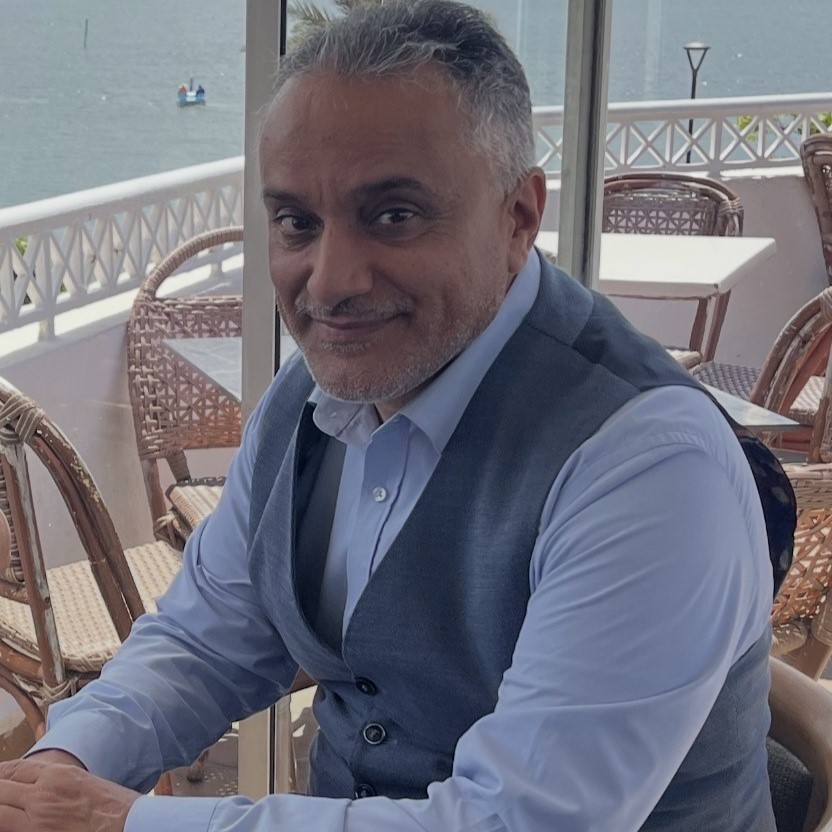
With the increasing reports of what political factions in Libya describe as “managing the division,” and the resulting economic dysfunction stemming from the power struggle between two rival governments—one based in Benghazi in the east and the other in Tripoli in the west—signs of a potential breakthrough are emerging in a country that possesses the largest oil reserves in Africa and has investment assets of around $100 billion. These signs include efforts to unify the financial institutions (establish a single budget), regulate the domestic market, and improve the living conditions of its approximately 7.5 million inhabitants. In an exclusive interview with Africa News Info, Libyan economist and Director General of the Binaa International Program for Sustainable Development, Mustafa Al-Saqazli, stated that “the Libyan economy has a genuine opportunity to recover after years of division and corruption by establishing a conducive environment to support micro, small, and medium-sized enterprises (MSMEs) and startups, and by strengthening the private sector through encouraging entrepreneurship. This aims to diversify the economy, reduce dependence on the oil sector, and, in particular, create job opportunities outside the public sector. The goal is to lay the foundations for comprehensive and sustainable development that will benefit the country and promote growth and prosperity.”
Al-Saqazli added that “the Binaa International Program for Sustainable Development is working to reach as many young people as possible, specifically to encourage them to pursue private initiatives. This is being done through mechanisms discussed with relevant governmental and financial institutions concerned with the economy and development, in order to meet the demands of the labor market and enhance the creative capabilities of those seeking opportunities for excellence and innovation in various fields. This will open up ambitious horizons for a wide range of Libyans, enabling them to achieve their goals and successfully implement their economic projects, thus contributing effectively to the country’s development.” Mustafa Al-Saqazli argued that Libya, as a rentier state whose income is limited to oil and gas revenues, needs a diversified economy to reduce the drain on its revenues for employee salaries. He pointed out that official estimates for 2014 showed that more than 30 percent of the population, or approximately 2.5 million employees, received their salaries from the state treasury, while global averages for the ratio of employees to the population range between 4 and 10 percent.
Reports from the Central Bank of Libya for 2024 indicate that 88.1 percent of the country’s oil revenue went towards paying government employee salaries. Public sector salaries for 2024 amounted to 67.6 billion dinars, while oil revenues for the same year reached 76.7 billion dinars. This is despite the fact that most government jobs are unproductive and contribute nothing to the Libyan economy. Furthermore, they do not serve vital sectors such as health, education, infrastructure, transportation, industry, agriculture, and other essential areas. This necessitates focusing on developing small and medium-sized enterprises (SMEs) to better serve the community.
A New Structure for the Libyan Economy: Encouraging the Private Sector and Combating Corruption
It appears that the expansion of government spending and the spread of financial and administrative corruption have become, for a number of Libyan institutions, among the most significant obstacles to the progress of the Libyan economy.
As a result, Libya ranked 92nd globally in the Human Development Index according to data from the end of 2022, and is considered one of the least expensive Arab countries to live in by 2025.
In this regard, Libyan economist Mustafa Al-Saqazli believes that international reports confirm that Libya is among the ten worst countries in the world on the corruption index for the current year. He argues that Libya needs political will to stimulate its economy, diversify its resources, and make optimal use of state resources, while holding accountable those who plunder its wealth. In the same vein, Al-Saqazli believes that “it is imperative to restructure the Libyan economy and strengthen the environment for small, medium, and emerging enterprises by establishing a system of laws and regulations that incentivize private entrepreneurs, including incentives and encouragement, while also integrating a culture of entrepreneurship into educational curricula at all levels. Furthermore, efforts should be made to create industrial and technological zones, as well as areas dedicated to training institutions and business development centers, to serve as incubators for projects. Additionally, there is a need to target young people to promote a culture of initiative and self-employment, among other systems that would help the Libyan economy move from a rentier economy and excessive government spending to one capable of achieving sustainable development.”
Al-Saqazli adds that achieving economic development and establishing the foundations of a genuine economic system and a fair and comprehensive financial system requires financing mechanisms for micro, small, and medium enterprises (MSMEs). Libyan banks in various regions can play a pivotal role in the success of the private sector and the sustainability of MSMEs by financing private projects, similar to what financial institutions do in many countries such as Saudi Arabia, Turkey, and Tunisia. This would empower entrepreneurs with access to financing that enables them to move forward with their economic projects easily and smoothly, thus achieving a qualitative leap in high-value-added and profitable economic sectors. This would also provide a strong support for the public sector and improve the employment capacity of different age groups.
The Binaa International Program for Sustainable Development: Towards a Diversified and Effective Libyan Economy
Our interviewee believes that the Binaa International Program for Sustainable Development, which he manages, works towards establishing an ecosystem for entrepreneurship and micro-enterprises.